

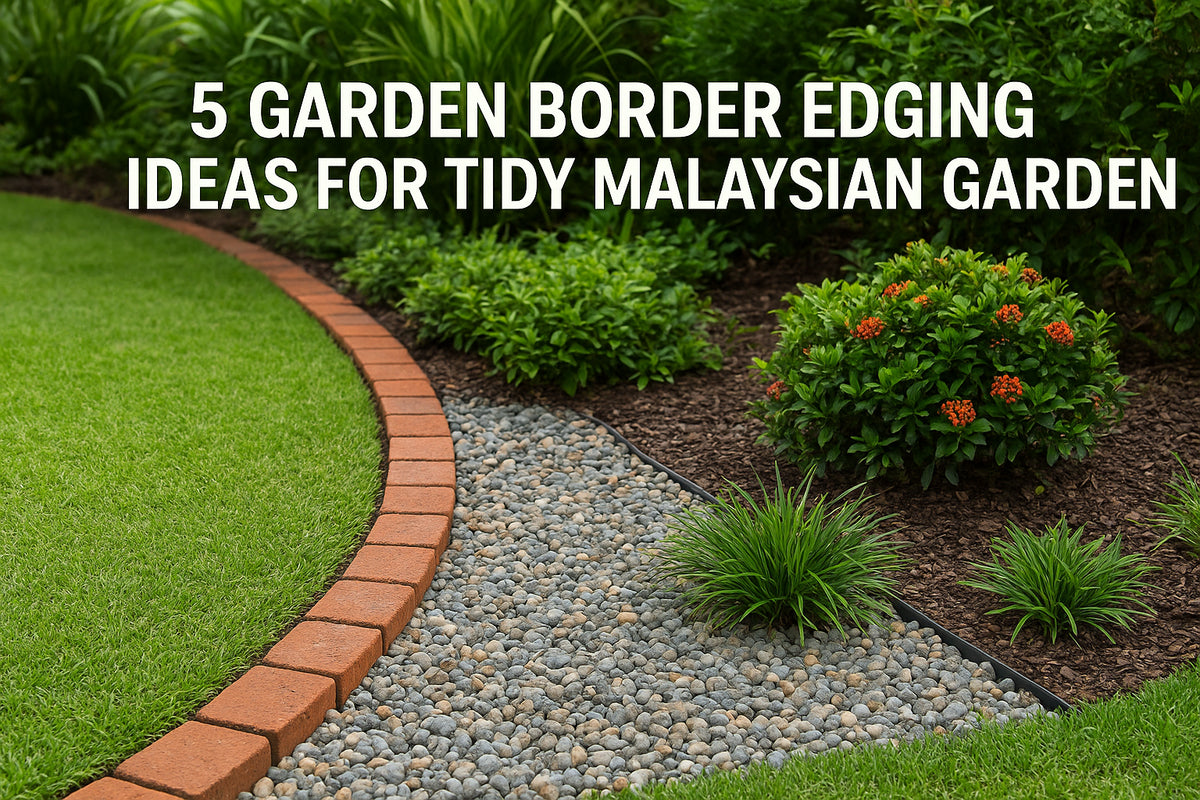
The best garden border edging ideas match the material to your garden's style, your budget and Malaysia's heavy rain. Brick and concrete pavers suit formal beds that need a durable edge you can mow over. Natural stone and gravel suit relaxed, well-drained gardens. Timber works for straight vegetable beds, metal gives the cleanest line around curves, and living plants give the softest finish.
Without a defined edge, grass runners creep into your beds, mulch washes onto paths after a downpour, and the garden looks untidy within weeks. In a tropical climate, growth is fast and rain is constant, so a weak edge fails sooner than it would in a cooler country.
This guide covers five edging types in detail: how each one is built, where it fits best, and what it costs in money and upkeep. At Konzept Garden we design and build residential and commercial landscapes across Malaysia, so the advice here comes from what holds up on real sites in this climate.
1. Brick and concrete pavers
How it works
Brick and pavers form a solid, low border along the bed. Dig a trench about 10 cm deep, compact a base of sand or crusher run, and set each unit snug against the next. Tap them level with a rubber mallet, then backfill the outside with soil so nothing shifts.
You can lay them in three common ways:
- Flat and flush with the soil: the mower wheel rides over it, so you trim the lawn edge in one pass.
- Upright or angled: a sawtooth pattern adds texture, but you need more units per meter.
- Stacked two courses high: this holds soil and mulch in a sloped or raised bed.
A brick or paver edge laid flush with the lawn does two jobs at once: it stops grass creeping in and gives your mower a track.
Best for
Brick and pavers suit formal front gardens, straight paths and gently curved beds. Square pavers bend around tight curves much better than long rectangular bricks, which leave gaps. A hard edge also gives artificial grass something firm to anchor against, which helps if you lay a synthetic lawn such as Noble Grass.
Rain does not harm masonry. In shaded, damp spots, though, algae and moss turn the surface slippery, so plan a scrub with a stiff brush a few times a year.
Cost and upkeep
This is a mid-range option where labor costs more than materials. Reclaimed bricks cost less than new ones and give a weathered look. Once set properly, the edge lasts for many years.
Upkeep is light. Pull weeds from the joints and reset any unit that sinks after a heavy storm. Do that before the gap lets soil wash out onto your path.
2. Natural stone and gravel
How it works
Stone edging sits on the soil surface. Gravel fills a shallow channel. For stone, set the stones along the bed line and press them into the ground until they sit firmly. Flatter, larger stones stay put, while small round ones roll out of line.
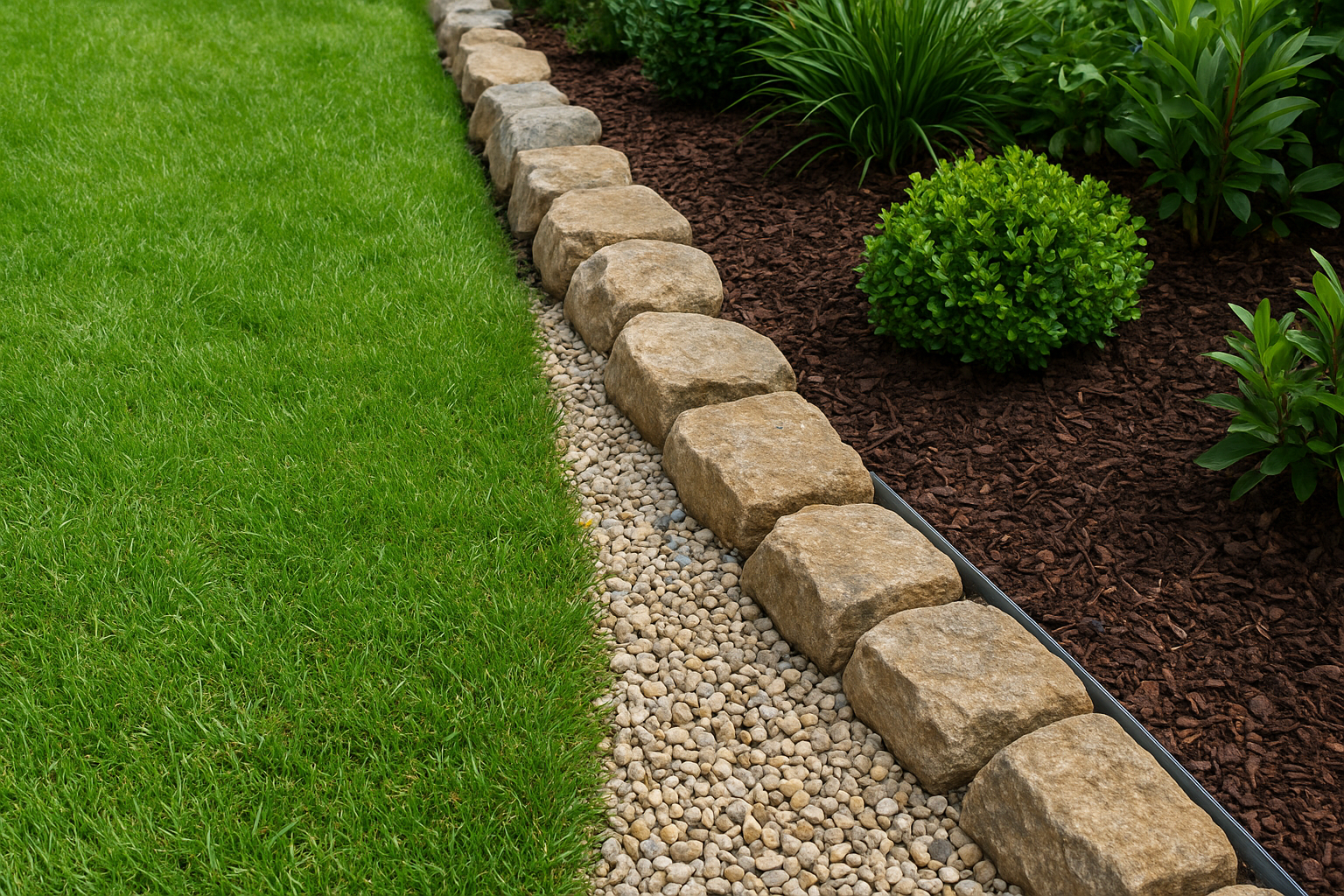
For gravel, cut a trench about 15 cm wide and 5 to 8 cm deep between the lawn and the bed. Line it with weed membrane before you fill it with pea gravel, river stones or crushed rock. Skip the membrane and weeds push through within a season. A strip of flexible plastic lawn edging or metal on the lawn side stops the gravel spilling.
A gravel strip needs a weed membrane underneath, because without one it becomes the highest-maintenance border in the garden.
Best for
These garden border edging ideas fit informal, resort-style and naturalistic gardens. Gravel drains well, which suits Malaysian downpours, and it creates a mowing strip so your trimmer never touches the plants. Large river stones also look right beside water features.
If you are edging a koi pond, a stone edge ties the pond into the beds around it. Our Himalaya Rock Koi Fish Pond is built around that natural rock look.
Cost and upkeep
Gravel is one of the cheapest edges per meter. Natural stone ranges from free, if you have it on site, to expensive for imported boulders. Neither rots, rusts or attracts termites.
Upkeep means raking out fallen leaves and topping up the gravel once or twice a year as heavy rain moves it. Stone borders just need an occasional reset when a piece tilts.
3. Timber and log edging
How it works
Timber gives a straight, sturdy border. Cut boards or sleepers to length, lay them along a shallow trench and fix them with stakes driven into the soil on the bed side. Use two stakes per board and screw them on so the stakes stay hidden from the lawn.
Log rounds set upright work differently. They sit about a third of their length in the ground and give a rustic, uneven rim. Either way, timber does not bend, so it works for straight runs and right-angle corners, not curves.
In Malaysia, the wood you choose matters more than the design, because damp soil and termites destroy the wrong timber quickly.
Best for
Timber suits vegetable plots, herb beds and raised borders where you want crisp straight lines. It also looks right in a rustic or cottage-style garden. For the edge of a food bed, choose untreated hardwood or check that any preservative is safe around edible plants.
Cost and upkeep
Cost depends entirely on the species. Soft, untreated wood is cheap but can rot within a few seasons in wet soil. Dense, naturally durable hardwoods such as belian or chengal last far longer, though they cost more and are not always easy to source.
Treated timber also lasts better when it is kept off direct soil contact, for example by sitting on a gravel base. Check the boards for soft spots and termite trails every few months, and replace a section before it fails.
4. Metal edging
How it works
Metal edging is a thin strip, usually steel or aluminum, that you push or hammer into a trench. Dig along your line, slide the strip in and leave 2 to 3 cm showing above the soil. Pegs or stakes hold it upright and joiners connect lengths.
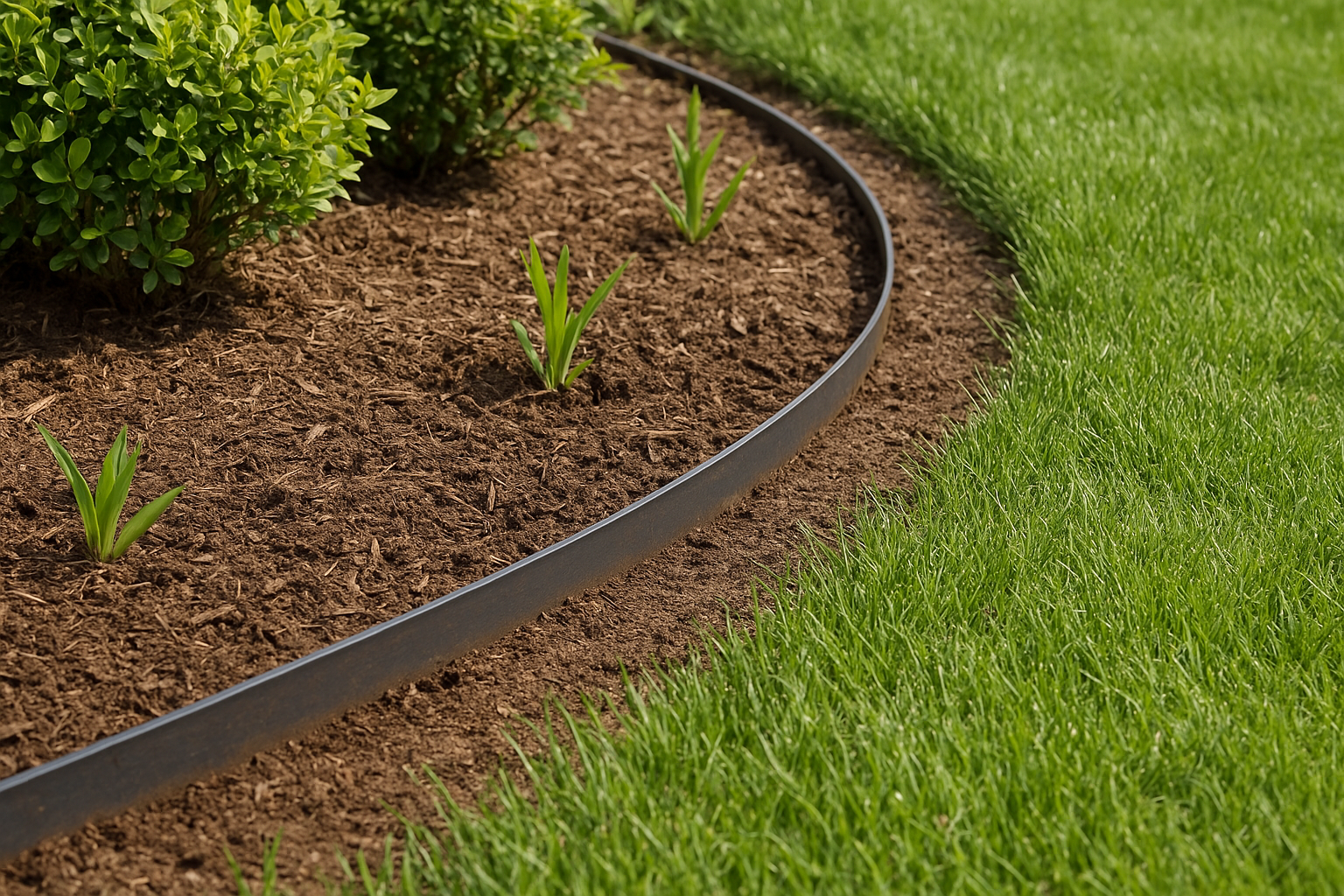
Strips flex into smooth curves that bricks and timber cannot follow. That makes metal the best choice when your bed has a flowing shape and you want the edge itself to disappear.
Metal gives the thinnest, sharpest line of any edging, but in Malaysia's humidity you must pick a finish that resists rust.
Best for
Metal suits modern gardens, curved beds and narrow strips where a brick would take up too much room. It also works as a neat divider between gravel and lawn, or between a planting bed and a path.
Think about finish before you buy. Plain mild steel rusts fast in humid weather. Galvanized steel, aluminum or stainless steel hold up better. Weathering steel develops a rust patina deliberately, which can look good against green foliage, but the rust can stain pale paving.
Cost and upkeep
Metal is usually mid-priced, and installation is quick. Because the strip is slim, a DIY job is realistic in an afternoon.
Upkeep is minimal. Keep the top edge just above soil level so mowers pass without catching it. Handle cut ends with gloves, since they can be sharp, and push down any section that lifts after heavy rain loosens the soil.
5. Living plant borders
How it works
A plant border uses low growers set in a tight row along the front of the bed. Space the plants so their leaves touch once they mature, then trim them to hold the line. Choose varieties that suit tropical conditions and stay compact.
Good options include:
- Dwarf mondo grass and liriope: tidy, grassy tufts that tolerate shade.
- Dwarf ixora: compact shrubs with bright flower clusters in full sun.
- Arachis pintoi (perennial peanut): a low groundcover with small yellow flowers.
- Clipped duranta: a taller hedge for edging around larger beds.
A plant border looks best when a hidden hard edge underneath keeps the lawn grass from creeping through the roots.
Best for
Plants give a soft, layered finish and suit cottage, tropical and informal gardens. Mondo grass and liriope work well along shaded paths. A living edge also adds color and texture that stone or metal cannot match.
It is a weak barrier on its own, though. Lawn grass runs straight through a plant border, so many designers pair it with a buried strip of metal or plastic.
Cost and upkeep
Plants are cheap to buy, but this edge needs the most maintenance and takes months to fill in. Tropical growth is quick, so expect to trim every few weeks during the wet season.
Replace any plant that dies right away, or the gap invites grass and weeds. In return, a mature plant border becomes part of the garden rather than a fixture beside it.
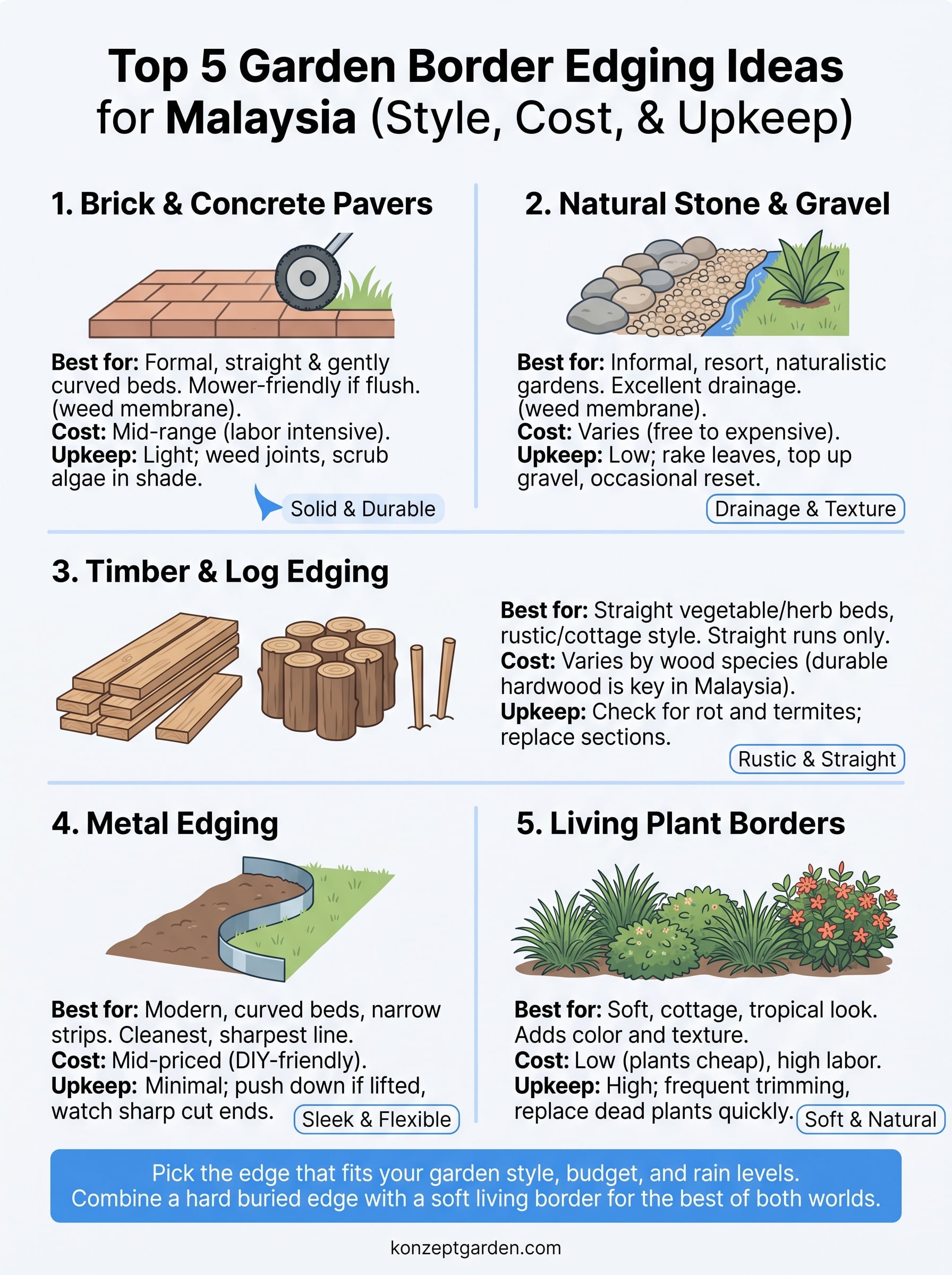
Pick the edge that fits your garden
For a formal or low-maintenance garden, choose brick or pavers. For a relaxed look with good drainage, choose stone and gravel. Timber suits straight food beds if you buy durable wood, metal handles curves cleanly, and plants give the softest result. Many of the best gardens combine two, such as metal below and plants above.
Whatever you pick, set the edge firmly and plan for rain, because that is what tests every border here. If you would rather have a designer plan the beds, edges and planting together, talk to our team about a free quotation and we will help you choose.


