

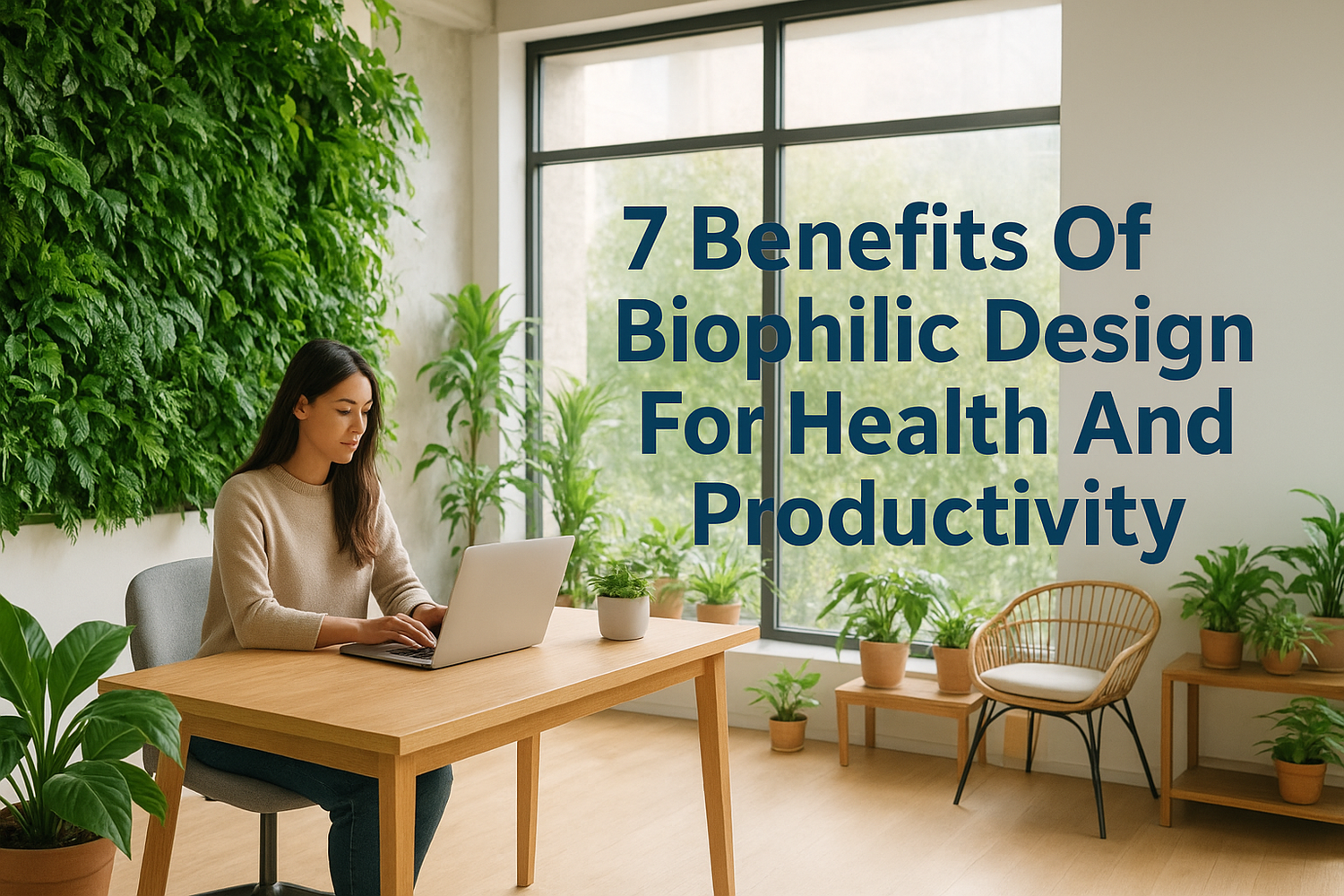
Concrete walls, fluorescent lighting, and sealed windows, most of us spend roughly 90% of our time indoors, cut off from the natural world. That disconnection carries real consequences for how we feel, think, and perform. Biophilic design addresses this gap by weaving natural elements, plants, water, natural light, organic materials, directly into the spaces where we live and work. The benefits of biophilic design go well beyond aesthetics, touching everything from stress levels and blood pressure to focus and creative output.
At Konzept Garden, we've seen these benefits play out firsthand across residential and commercial projects throughout Malaysia. When clients invite nature back into their environments, through living walls, garden spaces, or water features, the shift in how a space feels is immediate and measurable. It's a core reason our award-winning design team approaches every project with nature as a starting point, not an afterthought.
This article breaks down seven specific, evidence-backed ways biophilic design improves health and productivity. Whether you're a homeowner rethinking your outdoor living space or a business owner looking to boost employee well-being, these benefits make a strong case for bringing the outdoors in, and designing the outdoors with greater intention.
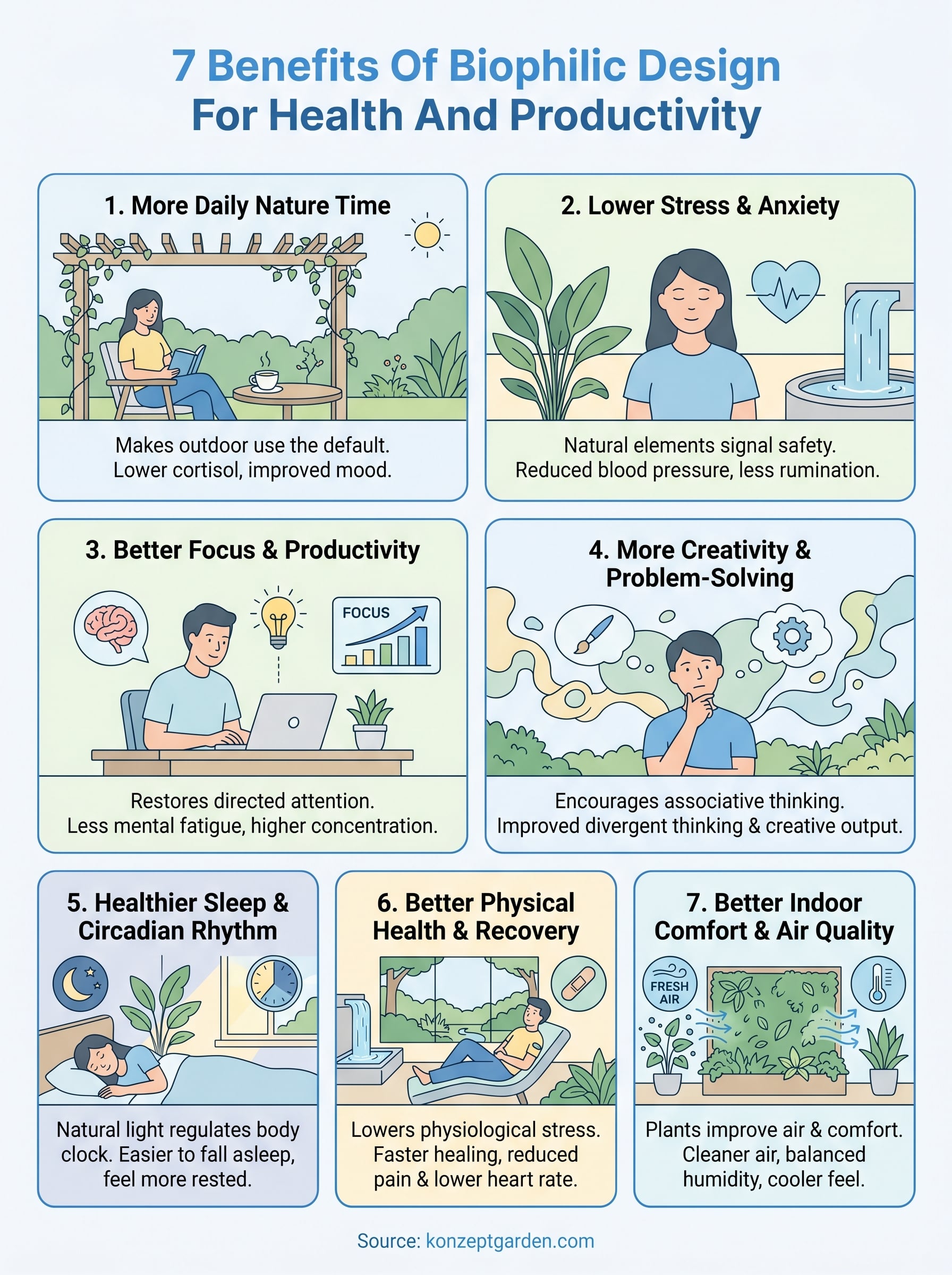
1. More daily nature time with a usable garden
Most people intend to spend more time outdoors but rarely follow through. A well-designed garden changes that by making outdoor time the default rather than the exception. When your outdoor space is comfortable, functional, and visually inviting, you naturally gravitate toward it after work, during breaks, or early in the morning. This is one of the most immediate benefits of biophilic design: it removes the friction between you and nature.
What the benefit looks like day to day
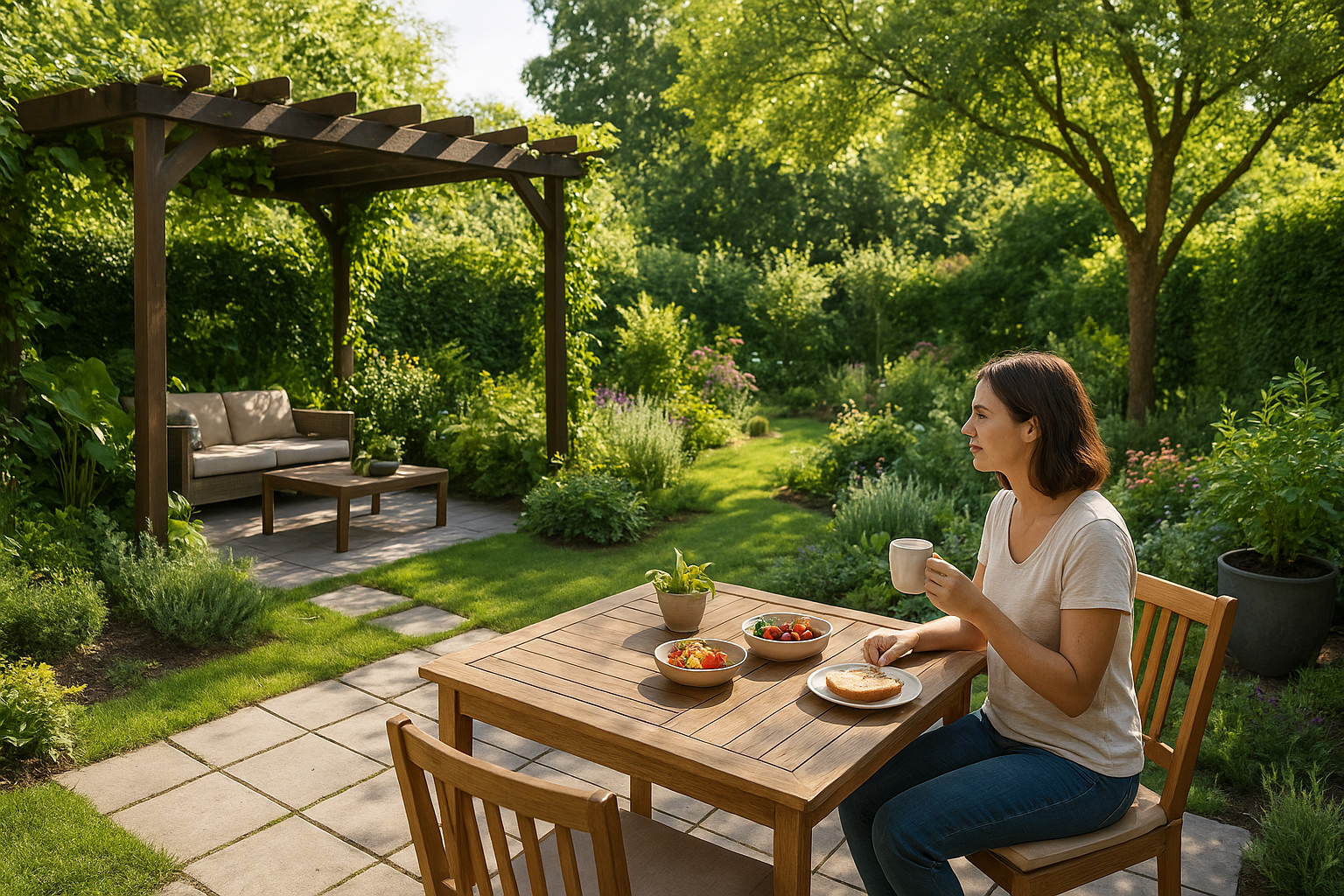
Instead of scrolling through your phone on the couch, you find yourself eating breakfast on a shaded garden terrace or working from a covered outdoor area in the afternoon. Your garden becomes a second living room that you actually use. You clock more hours outdoors without any deliberate effort, and that daily exposure to natural light, fresh air, and green surroundings adds up fast.
Your outdoor space also shifts how others in your household behave. Children play outside more, and guests naturally move toward a well-designed garden during visits rather than staying indoors.
The science in plain English
Research consistently links regular time in natural environments to lower cortisol levels, reduced blood pressure, and improved mood. A study from the University of Michigan found that even 20 minutes in a natural setting is enough to significantly reduce stress hormone levels. The more accessible your outdoor space is, the more often you use it, and every session counts.
Even short, consistent time outdoors produces measurable health improvements when the space feels inviting and easy to reach.
Best places to apply it at home and work
At home, covered outdoor seating areas, garden dining spaces, and planted corridors between indoor and outdoor rooms encourage daily use. Office environments benefit from the same principle. A landscaped courtyard or planted breakout zone gives employees a genuine reason to step outside during the day.
Design moves that deliver the benefit
Focus on shade, seating, and clear sightlines from your main indoor rooms. A pergola, shade sail, or mature tree canopy makes Malaysia's heat manageable. Add comfortable furniture, evening lighting, and a defined pathway that draws you naturally from the door into the garden.
Maintenance and cost notes
A functional garden does not need to be complex. Low-maintenance planting choices and durable materials keep upkeep realistic for a busy household. Self-watering planters like the Ziant Hydro Planter reduce the daily effort required, making it easier to sustain your outdoor space over the long term without constant attention.
2. Lower stress and anxiety
Stress builds quietly, and most people accept elevated anxiety as a normal part of daily life. One of the most well-documented benefits of biophilic design is its direct effect on your nervous system. Natural elements like plants, water, and organic textures signal safety to your brain, pulling you out of a heightened stress state.
What the benefit looks like day to day
You notice it in small ways first. Walking through a planted entryway, your shoulders drop. A background water feature masks traffic noise, and the persistent edge of tension in your body softens. Over time, your stress baseline lowers because your environment is actively working in your favor.
The science in plain English
Research shows that viewing natural scenes reduces activity in the prefrontal cortex region associated with rumination. Cortisol levels drop measurably within minutes of exposure to greenery and natural water sounds. Your brain responds to nature passively, which means you gain the benefit simply by being in the space.
The more frequently you're exposed to natural elements throughout the day, the more sustained your stress reduction becomes.
Best places to apply it at home and work
Living walls, indoor plants, and garden views deliver the strongest stress-reduction effect in spaces where you spend concentrated time:
- Home offices and bedrooms
- Workplace breakout areas and reception zones
Design moves that deliver the benefit
Position water features and dense planting within direct sightlines of your main seating and work areas. A small fountain or a leafy plant cluster near your desk makes a measurable difference.
Maintenance and cost notes
Low-maintenance vertical garden systems and self-watering planters keep upkeep manageable, so your calming garden feature doesn't become a new source of daily stress.
3. Better focus and productivity
Nature doesn't just calm you down; it also sharpens your attention. One of the clearest benefits of biophilic design is what it does to your ability to concentrate. When your environment includes natural elements like plants, daylight, or garden views, your brain recovers faster from mental fatigue and sustains focus for longer stretches.

What the benefit looks like day to day
You notice fewer mid-afternoon slumps and less of the restless, scattered feeling that builds after hours at a screen. A view of greenery or a planted partition near your workspace gives your eyes and mind a brief reset without requiring you to stop what you're doing.
The science in plain English
Attention Restoration Theory, developed by Rachel and Stephen Kaplan, explains that natural environments restore directed attention by giving your brain a break from deliberate cognitive effort. Studies confirm that workers near windows with garden views report higher concentration and complete tasks more accurately.
Employees with access to natural views score significantly higher on focus and job satisfaction than those in windowless spaces.
Best places to apply it at home and work
Apply biophilic elements wherever sustained mental effort is required. Both home and commercial spaces gain the most in these areas:
- Home offices and dedicated study rooms
- Open-plan workspaces and meeting rooms
Design moves that deliver the benefit
Position indoor plants or a living wall within your direct line of sight from your primary work surface. Even a single large-leafed plant at desk level delivers measurable improvement.
Maintenance and cost notes
Self-watering planters keep desk-level greenery alive with minimal daily effort, making this one of the most cost-effective biophilic upgrades you can make to any workspace.
4. More creativity and problem-solving
Nature doesn't just restore your attention; it also unlocks creative thinking. One of the less obvious benefits of biophilic design is how natural surroundings shift your brain from rigid, task-focused thinking toward the looser, associative thinking that drives original ideas and sharper problem-solving.
What the benefit looks like day to day
You notice it when a fresh idea surfaces during a walk through a planted corridor or when a conversation in a garden breakout area produces the solution a conference room couldn't. Your environment directly shapes your cognitive flexibility, often without you realizing it.
The science in plain English
Research from the University of Utah found that people who spent time in nature scored 50% higher on creative problem-solving tasks than those who hadn't. Natural settings reduce cognitive overload, freeing up the mental bandwidth your brain needs to make unexpected connections between ideas.
Time in nature measurably improves divergent thinking, the exact cognitive mode that generates original ideas.
Best places to apply it at home and work
Garden courtyards, planted walkways, and green breakout zones give your mind the right conditions for creative work. Consider these spaces specifically:
- Outdoor meeting areas with natural shade
- Planted corridors between office zones
- Home garden seating set away from screens
Design moves that deliver the benefit
Prioritize varied planting, organic shapes, and flowing water over rigid, uniform layouts. Natural visual complexity gives your brain the low-level stimulation it needs to stay creatively engaged without feeling distracted.
Maintenance and cost notes
Layered planting schemes using drought-tolerant species require minimal upkeep while sustaining the visual richness that drives this creative benefit over the long term.
5. Healthier sleep and circadian rhythm
Your sleep quality is directly tied to how much natural light you receive during the day. One of the most overlooked benefits of biophilic design is how natural elements, particularly daylight and greenery, help your body maintain a consistent circadian rhythm, making it easier to fall asleep and wake feeling rested.
What the benefit looks like day to day
You wake more alert and fall asleep with less effort. Spending time in naturally lit garden spaces or working near large windows during the day reinforces your body's internal clock, so you're not fighting against it at night.
The science in plain English
Natural light exposure regulates melatonin production by signaling your brain when to wind down. Research published by the National Institutes of Health confirms that workers with access to daylight and outdoor views sleep an average of 46 minutes longer per night than those without.
Consistent daytime exposure to natural light is one of the most powerful, drug-free tools for improving sleep quality.
Best places to apply it at home and work
Focus biophilic elements in spaces you use during the morning and early afternoon, when light exposure has the strongest circadian effect. Garden-facing breakfast areas and open-plan living rooms with unobstructed natural light deliver the most benefit.
Design moves that deliver the benefit
Use large glazed doors or open-sided pergolas to maximize daylight penetration into your main living zones during peak morning hours.
Maintenance and cost notes
Mature tree canopies and climbing plants on pergola structures provide filtered light rather than harsh direct sun, keeping your outdoor spaces usable year-round with minimal ongoing cost.
6. Better physical health and recovery
Beyond how you feel mentally, nature exposure produces real, measurable changes in your body. One of the more compelling benefits of biophilic design is how it supports physical health and recovery by lowering blood pressure, reducing heart rate, and speeding up healing after illness or surgery.
What the benefit looks like day to day
Your body responds to natural surroundings in ways you don't consciously control. Blood pressure drops, muscle tension releases, and your heart rate settles when you spend time in a planted space or near water.
If you're recovering from an injury or illness, access to a garden view can meaningfully shorten your recovery timeline without any deliberate effort on your part.
The science in plain English
A landmark study by researcher Roger Ulrich found that hospital patients with window views of trees recovered faster and required less pain medication than those facing a blank wall. Additional research links regular nature exposure to lower resting blood pressure and reduced inflammation markers.
Patients with garden views needed fewer painkillers and left the hospital sooner than those without access to natural views.
Best places to apply it at home and work
Focus recovery-oriented biophilic elements in bedrooms and rest areas, specifically:
- Garden-facing bedroom windows
- Planted outdoor recovery spaces or shaded lounge areas
Design moves that deliver the benefit
Position planted garden beds or a water feature where they're visible from your main rest areas. A clear garden sightline from your bed or lounge delivers the benefit passively.
Maintenance and cost notes
Hardy tropical plants common in Malaysian gardens require minimal upkeep while providing the consistent greenery your body responds to.
7. Better indoor comfort and air quality
Plants do quiet work inside your space. One of the practical benefits of biophilic design is how greenery and natural ventilation strategies improve the air you breathe and the thermal comfort of your rooms, reducing reliance on air conditioning and cutting the background pollutants that accumulate indoors.
What the benefit looks like day to day
Your indoor spaces feel fresher and easier to breathe in. Rooms with living plants or green walls tend to feel cooler and less stuffy than sealed, heavily air-conditioned environments, even in Malaysia's tropical climate.
The science in plain English
NASA's Clean Air Study confirmed that common indoor plants absorb volatile organic compounds like formaldehyde and benzene released by furniture, paint, and flooring. Greenery also increases indoor humidity to healthier levels, reducing the dry-air discomfort that comes from prolonged air conditioning use.
Plants can remove up to 87% of air toxins in 24 hours under controlled conditions, according to NASA research.
Best places to apply it at home and work
Concentrate indoor planting and vertical garden systems in these high-impact zones:
- Living rooms and open-plan areas with heavy foot traffic
- Office spaces with poor ventilation or sealed windows
Design moves that deliver the benefit
Install a living wall or dense plant cluster near your air intake or main seating area. Pair indoor planting with operable windows or louvred screens to encourage natural cross-ventilation.
Maintenance and cost notes
Vertical garden systems with self-watering infrastructure keep maintenance low while sustaining the air quality gains over time without daily intervention.
A simple way to get started
The benefits of biophilic design are real, but they don't require a complete overhaul of your home or office to take effect. Start with one change that fits your space and budget. A shaded garden seating area, a living wall, or a water feature positioned near your main living zones gives you immediate returns on stress, focus, and physical comfort. Small moves compound quickly when your environment works with you rather than against you.
Building on those early wins with a professionally designed garden turns individual benefits into a cohesive outdoor space you use every day. Konzept Garden's team works with you from concept through full implementation, so your outdoor space reflects both your lifestyle and the natural environment around it. Every project starts with a free consultation and quotation. Talk to our team about your garden project and find out what's possible for your space.